AnalysisProperty taxMunicipal
Mississauga property tax 2026: why Peel Region and police drove a 5.21% increase
By VotersDesk · · 5 min read
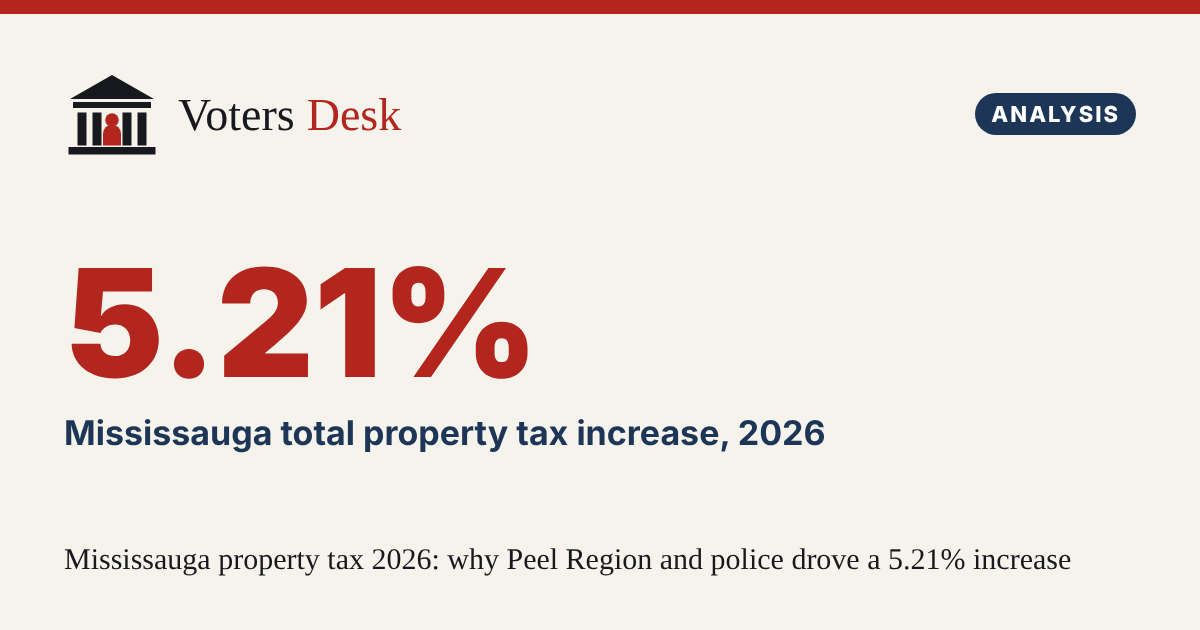
Mississauga's 2026 city budget kept the city's share of the tax increase to 1.61 per cent, below inflation. Homeowners still got a 5.21 per cent increase. More than two-thirds of it came from Peel Region, and the largest single driver inside Peel was police.
5.21%
Total 2026 residential property tax increase in Mississauga
Source: City of Mississauga
1.61%
City of Mississauga share of the increase (from a 4.39% rise in the city budget)
Source: City of Mississauga
3.60%
Peel Region share of the increase for Mississauga taxpayers
$377
Extra tax on a home assessed at $700,000, about the city average
Why did Mississauga taxes go up 5.21 per cent if the city only added 1.61?
Mississauga is a lower-tier city inside Peel Region. Your bill pays the city, the region and the school boards. In 2026 the region's portion of the increase, 3.60 per cent for Mississauga taxpayers, was more than double the city's (City of Mississauga).
| Peel Region | 3.60 pts |
|---|---|
| City of Mississauga | 1.61 pts |
On a home assessed at $700,000, close to the city's typical assessment, that's about $377 more for 2026, or roughly $54 for every $100,000 of assessed value (insauga).
What is driving Peel Region's increase?
Police. Peel Region's budget documents show its overall property tax increase of 3.36 per cent breaks down into 1.53 points for regional services, 1.77 points for Peel Regional Police and 0.06 for other agencies (Peel Region, 2026 Budget Overview). In other words, the police alone added more to the regional bill than every other regional service combined, including paramedics, public health, long-term care, housing and waste.
The Peel Police Service Board approved a 2026 budget of $837.3 million, up 9.9 per cent, to hire 175 more officers as part of a plan for 600 over three years (Peel Regional Police). Regional council cut the overall tax increase from what staff first proposed, but none of those cuts touched the police budget, according to The Pointer, which reported the force's budget is up more than 80 per cent in five years (The Pointer).
Regional councillor Chris Fonseca of Mississauga wrote in December 2025 that Mississauga residents pay 62 per cent of Peel police costs while Brampton pays 38 per cent (Chris Fonseca). The cost-sharing formula between the two cities is a live political fight.
What did the city itself cut?
The city says the 2026 budget includes $17.4 million in savings through deferred expenses, budget reductions and increased revenues (Ontario Construction News), and the mayor said every department cut its budget by 2 per cent or more (MPulse).
There's a bigger reason the city's share was so low. The city cut its Capital Infrastructure and Debt Repayment Levy from 3 per cent to 1 per cent for one year and paused its 1 per cent fire levy (MPulse). Those levies pay for infrastructure and fire services. Pausing them lowers this year's bill, but the costs don't disappear.
Deferred spending deserves the same closer look. Pushing road work or maintenance into future years lowers this year's number but usually raises the long-term cost. Residents should ask which savings are permanent.
How is a Mississauga tax bill calculated?
Assessed value times the combined tax rate. Assessments in Ontario are still frozen at 2016 values (our explainer), so the increase on an unchanged home comes entirely from rate decisions at city hall, regional council and Queen's Park.
What we think
Mississauga kept its own share low, largely by pausing infrastructure and fire levies for a year. Even so, the city's share is less than a third of the increase. Real accountability for 2026 sits at regional council, where Mississauga councillors also vote, and where a police budget growing near 10 per cent a year went through untouched. A city can't call itself affordable while voting through a regional budget it says it can't control.
Quick answers
- How much did Mississauga property taxes go up in 2026?
- The total residential increase was 5.21 per cent: 1.61 per cent for the City of Mississauga and 3.60 per cent for Peel Region. On a home assessed at $700,000, about the city average, that is about $377 more for the year.
- Why did Peel Region raise taxes in 2026?
- Police were the largest driver. Of Peel's average 3.36 per cent increase, 1.77 points were for Peel Regional Police and 1.53 for all other regional services. The police board approved an $837.3 million budget, up 9.9 per cent.
Sources
- City of Mississauga: 2026 Budget adopted
- City of Mississauga: Mayor's 2026 residential tax update
- Peel Region: 2026 Budget Overview
- Peel Regional Police: Board approves 2026 budget
- The Pointer: Peel council approves 2026 budget
- Chris Fonseca: Peel Region 2026 budget approved
- Ontario Construction News: Mississauga adopts 2026 budget
- MPulse: Mississauga property tax rates 2026
- insauga: Budget finalized, 2026 tax bill in Mississauga
Spotted an error? We correct it and note the change at the top of the article. See how we work.
Discussion
Criticize decisions, votes and spending as hard as you like. Threats, slurs, personal attacks and accusations of crimes without a public record are removed. Comments with links or flagged words are reviewed before they appear.
Loading comments…
Get the facts in your inbox
One email with the week's budget and policy analysis, sources linked. Free. Unsubscribe any time.